


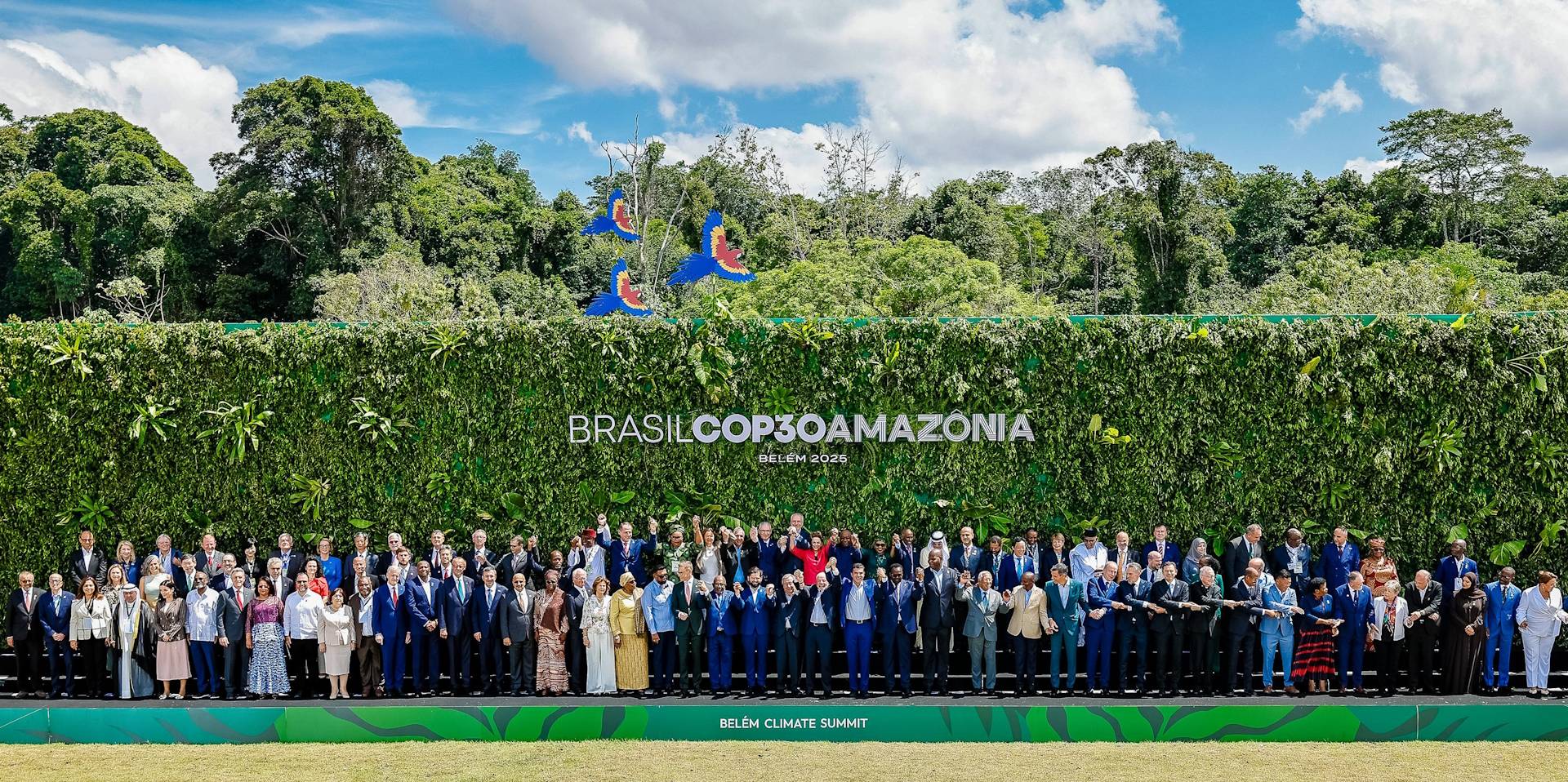
With no mention in the official text of eliminating fossil fuels and deforestation — the two largest global sources of emissions — or of where all the money needed to contain the climate crisis will come from, COP30 has become the target of criticism, especially from international civil society. According to Carolina Pasquali, executive director of Greenpeace Brazil, some countries continue to not treat emergencies as emergencies or crises as crises.
“The COP of Truth revealed truths that, unfortunately, we already know: the fossil fuel lobby, the agribusiness giants, and other sectors that continue to profit from our destruction have been successful in hindering progress and muddying the waters,” she said.
Ilan Zugman, Director for Latin America and the Caribbean at the NGO 350.org, emphasized that the lack of concrete commitments in the final COP30 text shows who continues to benefit from the delay. “It’s the fossil fuel industry and the ultra-rich, not those who live with the climate crisis day after day.”
According to Laura Restrepo Alameda, from Climate Action Network Latin America (CANLA), the refusal of developed countries to allow anything concrete for the transition in the texts revealed a lack of political will incompatible with the 1.5 °C limit.
“This failure jeopardizes intergenerational rights, especially those of children, who will inherit a crisis they did not create. It also highlights the urgent need for honest conversations about justice, reparations, and structural accountability,” she stressed.
However, the Global South, above all, no longer has time to wait for another COP that does not seriously consider the need to transition beyond fossil fuels, such as oil and coal, stressed Carolina Sánchez Naranjo, coordinator of the Fossil-Free Greater Caribbean Network.
“Every year, many of our Caribbean countries need between 5% and 10% of their GDP just to recover from hurricanes and climate disasters caused by emissions from the Global North,” she reported.
Regarding the lack of funding, Ana Carolina González Espinosa, Senior Director of Programs at the Natural Resource Governance Institute (NRGI), said that turning words into action will also require a profound shift in financial support to ensure that the energy transition is both equitable and viable.
“Without this, expecting people and communities in the oil-producing regions of the Global South to undertake high-risk transitions will remain an impossible dream,” she pointed out.
Furthermore, the dramatic absence of decisions on roadmaps for the energy transition and for reducing global deforestation ultimately fails to strengthen multilateralism, assessed Fernanda Carvalho, Global Leader of Climate and Energy Policy at WWF International.
“These roadmaps would allow progress from the commitment made in 2023 in Dubai (COP28), especially at a time when national emissions reduction targets, the NDCs, remain insufficient to keep average global warming to 1.5 °C,” she explained.
Beyond the COP horizon
Marking a decade after the Paris Climate Agreement, at COP21, which brought the current goals to avoid climate collapse, COP30 ended up reaping advances on other negotiating fronts, according to sources from civil society organizations.
According to Zugman, the global mobilization in the streets of Belém spurred a coalition of nearly 90 countries supporting the end of the production and use of fossil fuels. “This momentum is already unstoppable, beginning with the conference on the elimination of fossil fuels in Colombia next April.”
“We hope to advance the dialogue to accelerate the transition to phasing out fossil fuels after COP30,” Naranjo added regarding the event.
In this sense, Tatiana Oliveira, international strategy leader at WWF-Brazil, assessed that COP30 was a turning point by recognizing that climate action goes beyond the negotiation rooms of the UNFCCC. “The gap between social power and the fragile pages of the agreement shows that solutions come from people and territories.”
“Many victories that truly matter, such as the inclusion of Afro-descendants in the text and the mention of the territorial rights of Indigenous Peoples and Free, Prior and Informed Consent, are historic steps that help guarantee rights,” she highlighted.
In this context, Gisela Hurtado, campaign coordinator for the Amazon at Stand.earth, highlighted the recognition of the rights of Indigenous Peoples — including their right to self-determination — as a victory for COP, “held for the first time in the Amazon, home to most of the world’s isolated peoples.”
Regarding these populations, Pasquali highlighted the historical participation of Indigenous Peoples that led to the demarcation and recognition of their lands, the massive Global Climate March, and the resources mobilized for forests.
“Certainly, there is a legacy of engagement and mobilization that we have not yet been able to measure, but which will bring positive impacts to our country,” she pointed out.
The executive director of WWF-Brazil, Maurício Voivodic, stated that 117 plans were mobilized to accelerate large-scale solutions, involving sectors throughout Brazil and the world, in a conference marked by the strong inclusion of social groups such as Indigenous Peoples and local communities.
“COP30 presented important results that go beyond the official negotiating texts, and this should be taken into account. Climate action is not — and should not be — restricted to formal conversations,” he stressed.
This report was produced by ((o))eco, through the Collaborative Socio-environmental Coverage of COP 30. Read the original report here
-
Aldem Bourscheit
Jornalista cobrindo há mais de duas décadas temas como Conservação da Natureza, Crimes contra a Vida Selvagem, Ciência, Agron... →
Se o que você acabou de ler foi útil para você, considere apoiar
Produzir jornalismo independente exige tempo, investigação e dedicação — e queremos que esse trabalho continue aberto e acessível para todo mundo.
Por isso criamos a Campanha de Membros: uma forma de leitores que acreditam no nosso trabalho ajudarem a sustentá-lo.
Seu apoio financia novas reportagens, fortalece nossa independência e permite que continuemos publicando informação de interesse público.
Escolha abaixo o valor do seu apoio e faça parte dessa iniciativa.
Leia também
Roadmap for Phasing Out Fossil Fuels Left Out of Final COP30 Text
Brazilian presidency proposes an “alternative” roadmap on the issue. Civil society laments the omission but sees an opportunity for dialogue →
In an unprecedented move, countries unite in a coalition to end fossil fuels
Around 80 nations have already expressed their support for the process of building a “Roadmap” for decarbonization →
Communities launch Global Forum and increase pressure for political recognition at COP30
Unprecedented alliance brings together communities from three continents to demand formal recognition and full participation in global climate negotiations →