


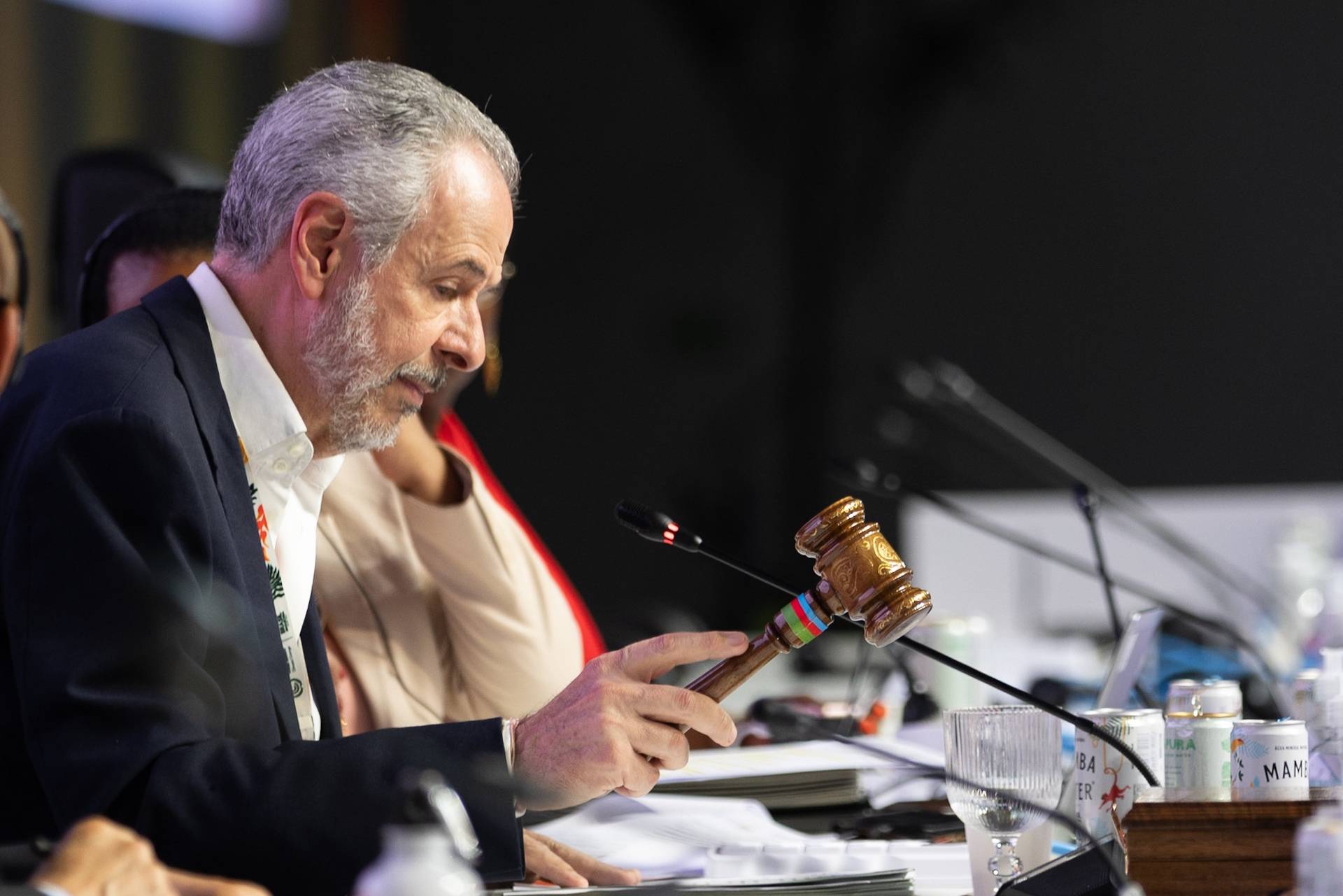
The demand from around 80 developed and developing countries for an end to the use of fossil fuels — the biggest cause of climate change — was left out of the final text of the 30th UN Climate Conference, in its final moments until the afternoon of this Saturday (22), after two intense weeks of discussions and twists and turns. A voluntary initiative by the Brazilian presidency, however, brings the world one step closer to the end of the fossil fuel era.
Even after negotiations that lasted through the night from Friday to Saturday, the group that opposed mentioning the end of fossil fuels in the final COP30 text — led by Saudi Arabia and its allies, as well as Russia — won the battle.
As an alternative to the absence of the Roadmap in the negotiating text, Ambassador André Corrêa do Lago, during the final plenary session of COP30, said that he will “create two roadmaps,” one on halting and reversing deforestation, and another on transitioning away from fossil fuels in a fair, orderly, and equitable manner.
“We know that some of you have higher ambitions regarding some of the issues under discussion. I know that youth and civil society will demand that we do more to combat climate change. I want to reaffirm that I will try not to disappoint you during my presidency,” he said, announcing the voluntary initiative.
Corrêa do Lago said that the construction of the roadmaps will involve the participation of both fossil fuel producing and consuming countries, industry, workers, academics, and civil society.
“We will also benefit from the first international conference on phasing out fossil fuels, scheduled to take place in April in Colombia,” he said, referring to the initiative of the government of Gustavo Petro and 24 other nations, announced last Friday (see box).
According to Brazilian civil society organizations, André Corrêa do Lago’s initiative to create the “Roadmaps” so far seems very similar to what was done after the failure of COP29, held in Azerbaijan, with the “Baku-Belém Roadmap for US$1.3 trillion”.
At that time, developing countries requested a funding target of US$1.3 trillion, but COP29 ended with a figure of only US$300 billion. André Corrêa do Lago then joined forces with the COP presidency of Azerbaijan to propose a path for scaling up the figure to the desired amount. Although “commissioned” by the UN, this roadmap was not formally recognized or approved at COP30, and it is unclear how countries will absorb the proposals.
This appears to be the same alternative now being put on the table for the Roadmap to End Fossils and End Deforestation: a roadmap with suggestions and proposals, without formal binding value within the framework of climate negotiations.
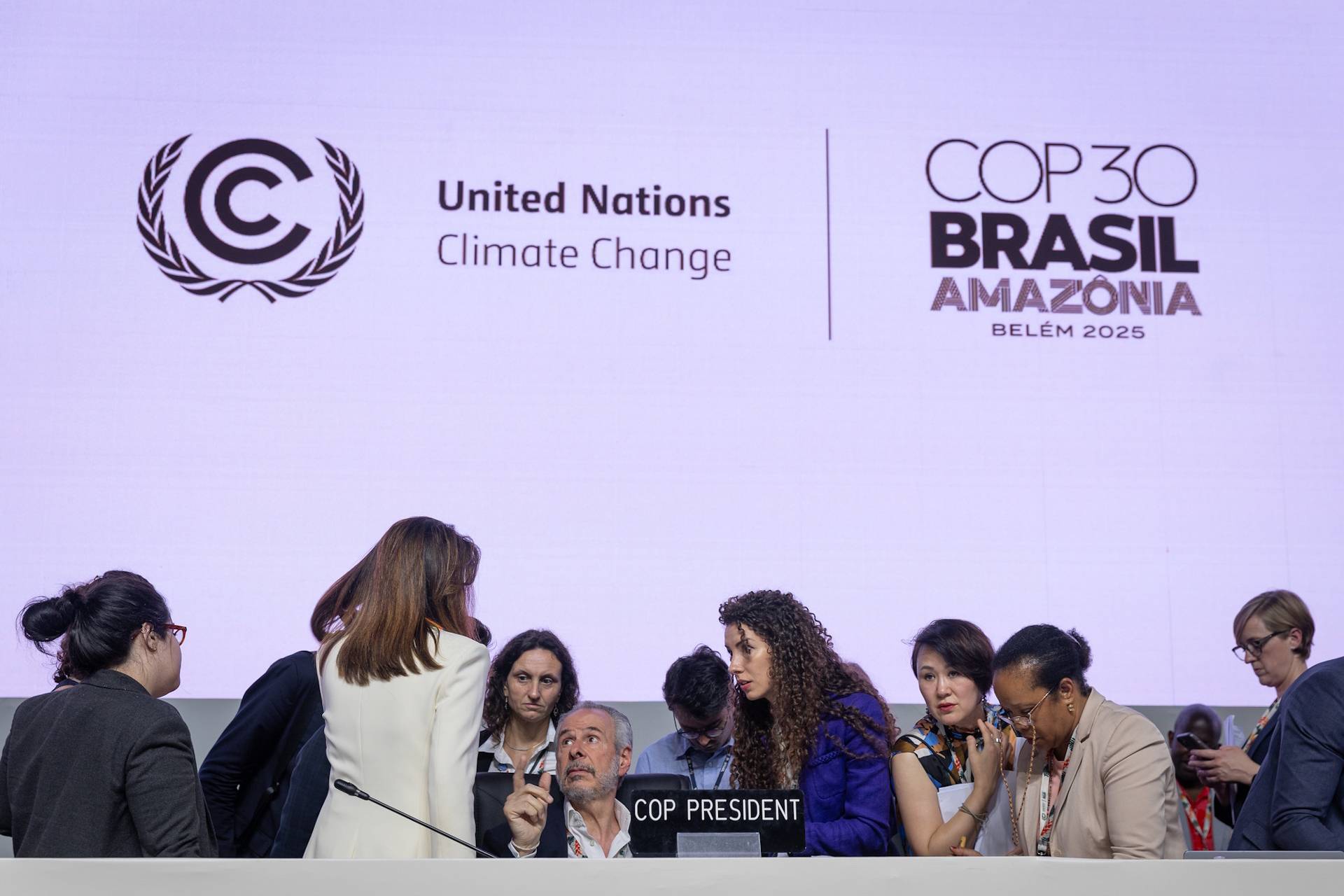
In and out
The inclusion of a commitment to create a “Roadmap” for the end of fossil fuels was advocated by President Lula and members of the Brazilian government on several occasions. The COP30 presidency attempted, until the very last moments of the negotiations, to include this topic in the final text of the “Mutirão Decision”.
The topic was mentioned — albeit timidly — in one of the drafts that circulated in recent days. However, the final COP30 document, in which the subject could have been mentioned, completely excluded the topics. The alternative found, then, by the COP30 presidency, was to propose the Roadmaps as a parallel initiative to the negotiations.
Although it is a voluntary proposal, the creation of the roadmaps was celebrated by some organizations. According to André Guimarães, executive director of IPAM, the proposal “opens the discussion” about zero deforestation and the global mapping of countries willing to eliminate fossil fuels from their energy matrix once and for all.
“Never in the history of the 30 climate conferences has the topic been so present at the negotiating tables. By bringing together public statements from leaders of more than 80 countries, Brazil demonstrates leadership in guiding the climate debate,” he said.
Declaration of Belém
A parallel proposal for the End of Fossil Fuels circulated at COP30 during the two weeks of negotiations.
This is the “Belém Declaration for the End of Fossils”, an initiative led by the Colombian government and endorsed by 24 other countries, officially launched last Friday (21).
This document reaffirms the signatories’ position to “work collectively for a just, orderly and equitable transition away from fossil fuels, aligned with trajectories compatible with limiting the increase in global temperature to 1.5°C.”
The following countries signed the Belém Declaration: Australia, Austria, Belgium, Cambodia, Chile, Colombia, Costa Rica, Denmark, Fiji, Finland, Ireland, Jamaica, Kenya, Luxembourg, Marshall Islands, Mexico, Micronesia, Nepal, Netherlands, Panama, Spain, Slovenia, Vanuatu, and Tuvalu.
Brazil did not sign this Declaration during COP30 because it tried, until the last moment, to reach an agreement so that the issues would be included in the official COP30 texts.
In addition to publishing this declaration, the coalition of signatory countries announced the holding of the first Conference on the End of Fossils, to be held in the Colombian city of Santa Marta, between April 28 and 29, 2026.
Scientific panel for the end of fossil fuels
For the first time represented with their own pavilion at a Climate Conference, scientists also spoke out about the absence of strong and binding commitments to end fossil fuel in the texts that emerged from COP30.
In a statement, the scientists reiterated that it is impossible to avoid a dangerous increase in global temperature without ending dependence on fossil fuels by 2040, or at the latest, by 2045.
Failure to meet this goal, they say, will push the world toward dangerous climate change within 5 to 10 years, causing increasingly intense weather extremes that will affect billions of people worldwide.
“Despite the best efforts of Brazil and many countries that worked to unite the world around a roadmap to end our dependence on fossil fuels, opposing forces blocked the agreement. They seem to ignore that, unlike the COP pavilions, we cannot evacuate planet Earth when disasters strike,” they said.
They stressed, however, that many countries have already shown themselves ready to face the process and that science will be on the side of these nations to guide the way.
“Working with the Brazilian Presidency, we will propose the creation of a Scientific Panel on the Just Energy Transition and the End of Fossil Fuels, to support the Global Implementation Accelerator,” they proposed.
This report was produced by ((oeco)) through the Collaborative Socio-environmental Coverage of COP 30. Read the original report here
-
Cristiane Prizibisczki
Jornalista com quase 20 anos de experiência na cobertura de temas como conservação, biodiversidade, política ambiental e mudanças climáticas. Já escreveu para UOL, Editora Abril, Editora Globo e Ecosystem Marketplace e desde 2006 colabora com ((o))eco. Adora ser a voz dos bichos e das plantas. →

Leia também
In an unprecedented move, countries unite in a coalition to end fossil fuels
Around 80 nations have already expressed their support for the process of building a “Roadmap” for decarbonization →

Global methane emissions keep climbing, study finds
A UN Environment Program report urges countries to take more ambitious action to cut methane (CH₄) emissions by 30% by 2030. →

The Brazilian Government Seeks to Advance Discussion on Ending Fossil Fuels at COP30
According to Marina Silva, the government wants to leave Belém with a “kind of mandate” to outline the roadmap. Germany, Denmark, and the United Kingdom support this →