


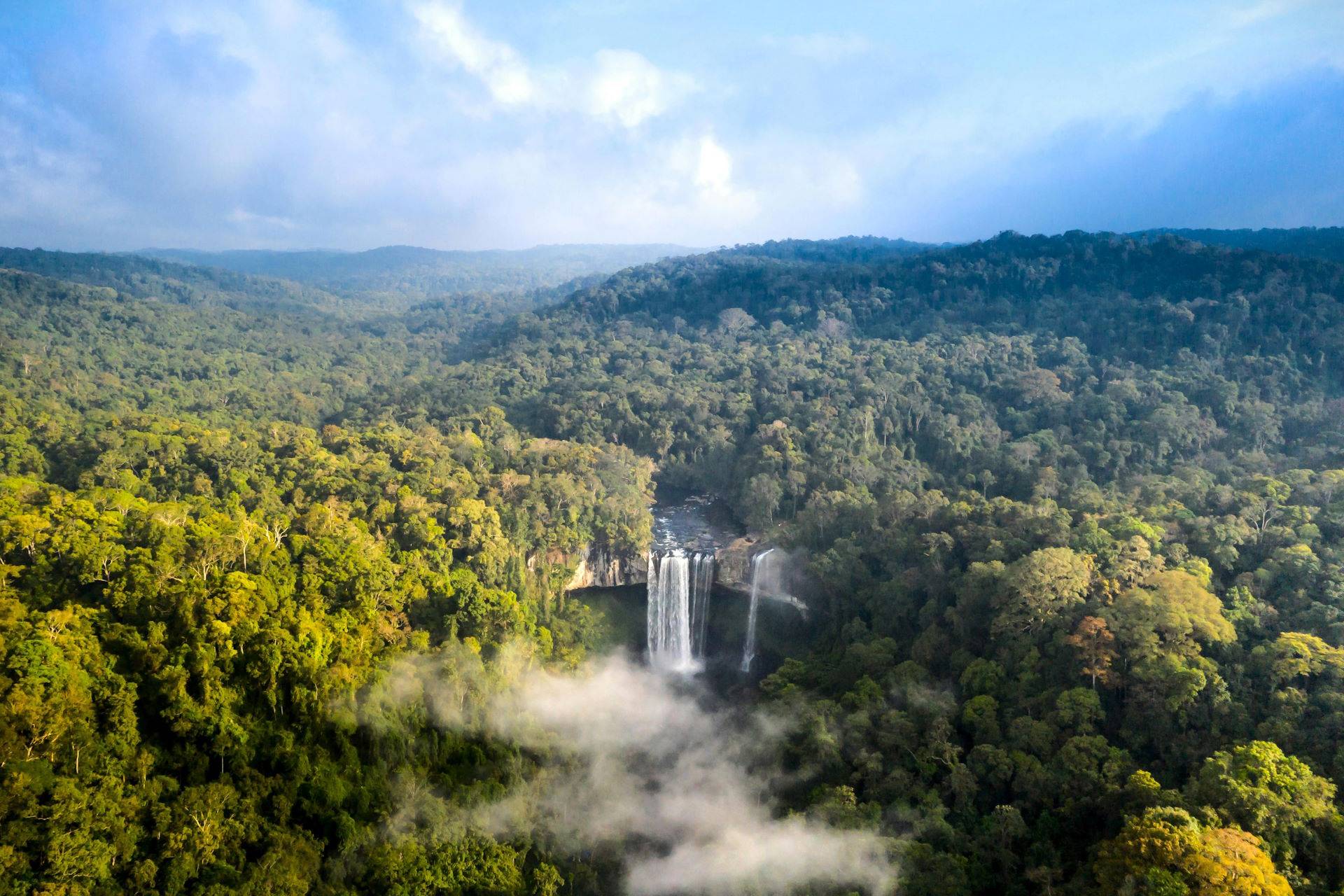
At COP30, scientists and diplomats reinforced the growing consensus that protecting biodiversity is essential to tackling the climate crisis. Therefore, integrating the conventions launched at the 1992 Earth Summit in Rio de Janeiro is seen as an inevitable step toward a more unified and effective response to global environmental emergencies.
In practice, closer coordination between global treaties can amplify and reinforce interventions—such as restoring native vegetation—that remove carbon dioxide from the atmosphere, protect biodiversity and combat desertification.
“This alignment will send a strong political signal, inspiring public and private actors to pursue tangible initiatives,” said Hugo Mendes, general coordinator for engagement and expression at the Climate Change Secretariat of Brazil’s Ministry of the Environment and a member of the COP30 delegation.
In Brazil, such coordination is crucial for putting commitments into practice. Without harmonized policies, economic pressures could continue to erode the necessary implementation of the three conventions adopted thirty years ago in Rio de Janeiro.
Against this backdrop, Júlia Shimbo—a researcher at the Amazon Environmental Research Institute (Ipam) and scientific coordinator at MapBiomas—emphasized that converting forests to farmland threatens biodiversity. “More than 40% of Brazil’s greenhouse gas emissions result from land use changes, especially deforestation,” she said.
Drawing on four decades of satellite imagery, Shimbo highlighted the need to restore ecosystems and strengthen connections among protected natural areas, Indigenous territories and other protected lands so more species can adapt to climate change.
“Biodiversity knows no borders. We must regard biomes as interconnected systems, where a single missing fragment can impact the entire whole,” Shimbo said.

Recognizing this reality, Ludmilla Rattis, a researcher at the Woodwell Climate Research Center and professor at the Dom Cabral Foundation (FDC), stressed that aligning climate and biodiversity policies also requires addressing agriculture.
“You cannot boost production at the expense of forests and natural landscapes. Such practices ultimately undermine productivity by destroying the ecosystem services on which agribusiness relies,” she said.
That is why Rattis advocates rural policies that promote “climate-proof landscapes”, including environmental restoration projects provided for under forest law, to link protected natural areas and other safeguarded lands. “This is the low-hanging fruit we can pick right now,” she said.
Rattis also cited the urgent need for more financial incentives to prevent deforestation on rural properties and better align production with conservation. “Producers will not give up their land unless they are compensated for the opportunity costs. We need to be pragmatic—time is working against us,” she warned.

Patrícia Médici, who holds a doctorate in biodiversity management from the University of Kent, noted that species like the tapir play a vital role in sustaining tropical forests and their biodiversity by dispersing seeds and shaping habitats. “They help maintain resilient ecosystems, which contribute to climate solutions,” she said.
Médici explained that when such species disappear, biodiversity drops and key ecological processes can collapse. “Countless empty forests across Brazil may appear intact, yet they have lost their ecological function because the animals that sustained them are gone,” she said.
Rattis, Shimbo and Médici participated in a debate on climate change and biodiversity conservation in Brazil, organized by the Instituto de Pesquisas Ecológicas (IPE), an environmental research NGO, during COP30 in Pará’s state capital.
Accelerating integration at COP30
Talks on integrating the three conventions began on Nov. 11 at COP30. “Countries like Brazil are pushing for swift decisions, while the Arab group urges a more cautious approach,” explained Juliana Marcussi, manager of climate policy and carbon markets at the LaClima Institute.
Arab nations have called for a slowdown, ((o))eco understands, fearing that the convergence of the conventions could impose new obligations, alter the climate governance system, and threaten their economic interests—especially those linked to fossil fuels.
“If no agreement is reached, everything will be pushed to next year and our window for turning synergies into concrete results will narrow,” Marcussi emphasized.
She says the discussion must move beyond theory and begin shaping decisions and funding. “Ideally, the Climate Convention would formalize the process and set up a working group to chart integration,” she argued.
In short, the expectation is for the secretariats of all three conventions to launch ongoing collaboration, Mendes summarized. “The goal is for actions under one treaty to deliver benefits under the others as well,” the Environment Ministry official said.
However, Mendes stressed that this process must not impose new burdens on developing countries, such as funding cuts. “Each convention has its own commitments and distinct reports, and its financing should remain separate. It is unacceptable to consolidate all resource accounting,” he said.
By recognizing that the climate, biodiversity, and desertification crises are facets of the same emergency, integrating the conventions could mark a new era for global environmental governance. The urgent task is to secure political consensus and sustainable funding to drive real-world progress.
This article was produced by ((o))eco through the Socio-environmental Collaborative Coverage of COP30. Read the original Portuguese version here.
Translated by Juliana Horta
-

Aldem Bourscheit
Jornalista cobrindo há mais de duas décadas temas como Conservação da Natureza, Crimes contra a Vida Selvagem, Ciência, Agron... →
Se o que você acabou de ler foi útil para você, considere apoiar
Produzir jornalismo independente exige tempo, investigação e dedicação — e queremos que esse trabalho continue aberto e acessível para todo mundo.
Por isso criamos a Campanha de Membros: uma forma de leitores que acreditam no nosso trabalho ajudarem a sustentá-lo.
Seu apoio financia novas reportagens, fortalece nossa independência e permite que continuemos publicando informação de interesse público.
Escolha abaixo o valor do seu apoio e faça parte dessa iniciativa.
Leia também
Traditional wisdom and technology help extractivists confront the climate crisis in the State hosting the COP30
Beyond rising temperatures, fishermen also fear potential losses from oil spills originating at the mouth of the Amazon River. →

The Brazilian Government Seeks to Advance Discussion on Ending Fossil Fuels at COP30
According to Marina Silva, the government wants to leave Belém with a “kind of mandate” to outline the roadmap. Germany, Denmark, and the United Kingdom support this →
March in Belém Warns of the Risks of the Climate Crisis to Public Health
The slogans emphasized the direct connection between these two agendas, which mainly impact the most vulnerable populations →