


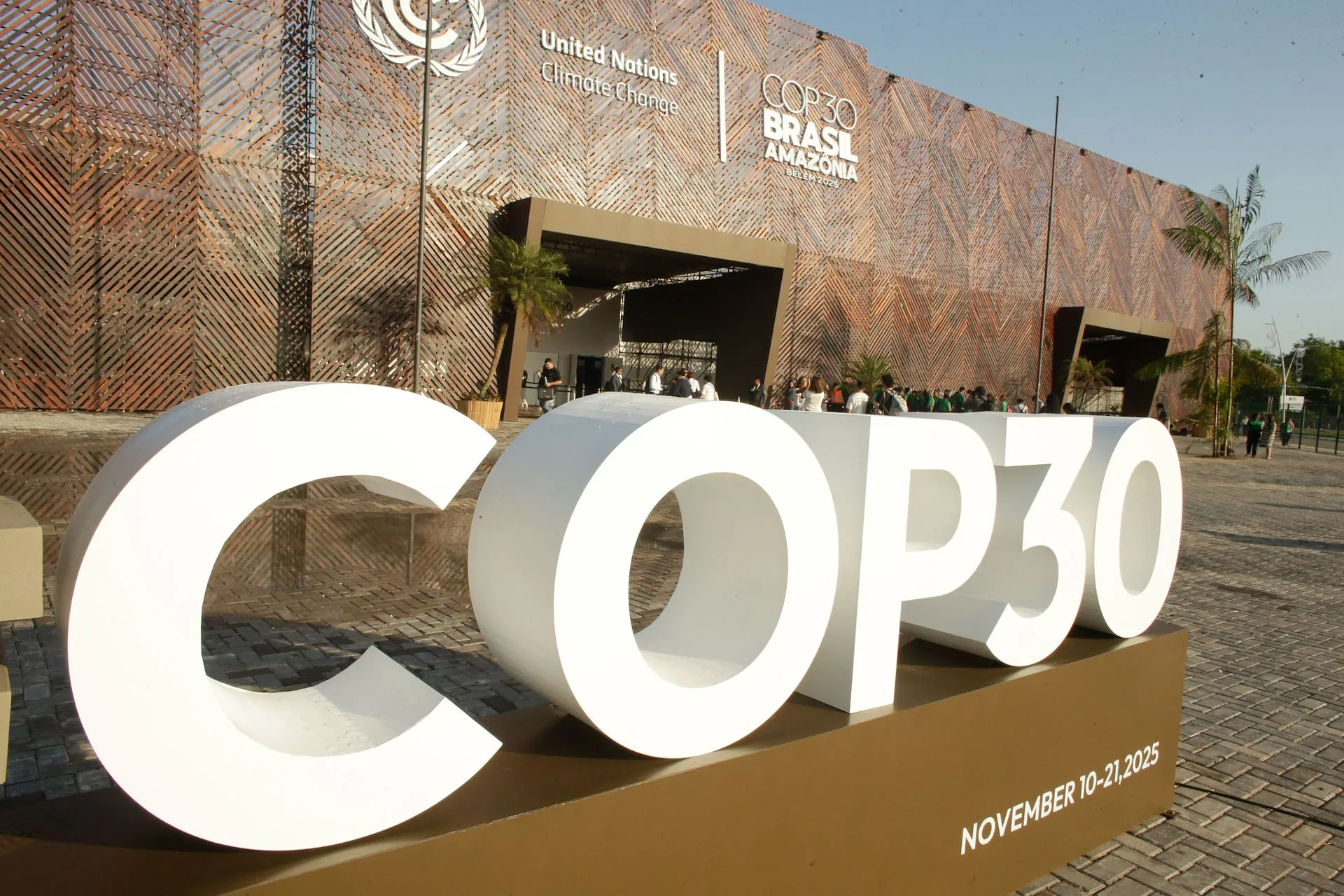
Belém (PA) – COP30 has opened space for an unprecedented movement: local communities from different regions of the planet have decided to build their own international political body. The Global Forum of Local Communities on Climate Change (GFLCCC), launched last week in Belém, marks the beginning of an articulation that aims to occupy, with autonomy and strength, a place historically denied to them in UN climate negotiations.
The announcement came after two years of dialogues led directly by community organizations from Africa, Asia, Latin America, and the Caribbean. This process paved the way for the creation of the International Caucus of Local Communities, a structure designed to amplify voices that, for decades, have denounced the absence of formal representation within the UNFCCC (United Nations Framework Convention on Climate Change), despite being on the front lines of biodiversity protection and climate adaptation.
A forum built from the inside out
Unlike the conference’s traditional structures, the Global Forum was conceived by the communities themselves, who defined the principles, governance mechanisms, and self-identification criteria. These criteria include collective territorial ties, including groups with territorial mobility, self-governance, ancestry, livelihood practices that conserve ecosystems, and traditional practices independent of state recognition.
The political coordination, which will operate from 2025 to 2027, will be shared by representatives from Nigeria, Cameroon, Nepal, Indonesia, Mexico, and Brazil, in a model meant to reflect the diversity and plurality of the coalition.
Representation blocked for seven years
The Forum’s central demand is to break a blockage that has persisted since 2018, when COP24 acknowledged the need to guarantee representation for local communities but never implemented the promised seats. The accumulated frustration translated into a firmer stance at this COP.
“The time for promises is over. Now it’s time for institutional coherence and courage,” said geraizeiro leader Samuel Caetano. For him, there is no technical or moral justification for the absence of local communities in decisions that directly affect their territories.
Gustavo Sánchez, from Red Mocaf (Mexico), emphasizes that the Forum emerges fully consolidated:
“We built a legitimate process. It is up to the Parties to recognize it and open the spaces that are rightfully ours.”
Five demands and a political message
The Forum delivered a letter to COP30 President Ambassador André Corrêa do Lago and to the UNFCCC Secretariat outlining five priority points: institutional recognition of the Forum; opening of direct dialogue channels; immediate participation in the process established by Decision 14/CP.29; activation of the seats designated for local communities in the FWG/LCIPP; and support to ensure the presence of regions in the Global South, where participation barriers are still greater.
The demands were reaffirmed in a meeting with UN Special Rapporteur on the Rights of Indigenous Peoples, Albert Barume, who acknowledged the political relevance of the initiative.
A turning point for climate justice
Brazilian and international organizations assess that the launch of the Forum could reshape social participation in global climate governance. Despite being historically marginalized, local communities are among those most impacted by extreme events – and among those offering concrete solutions to the crisis.
“Only a self-defined space can ensure real legitimacy,” says Guilherme Eidt of ISPN (Instituto Sociedade, População e Natureza) a Brazilian organization that works with indigenous and traditional communities.
The Forum now aims to consolidate an official constituency within the UNFCCC, in addition to pushing for direct access to climate finance, considered essential for communities to maintain their autonomy.
This story was originally published in Portuguese. The translation to English was done with the assistance of Artificial Intelligence, with final review by a human. For this story, the review was done by the reporter Duda Menegassi.
-
Karina Pinheiro
Jornalista formada pela Universidade Federal do Amazonas (UFAM), possui interesse na área científica e ambiental, com experiência na área há mais de 2 anos. →
Se o que você acabou de ler foi útil para você, considere apoiar
Produzir jornalismo independente exige tempo, investigação e dedicação — e queremos que esse trabalho continue aberto e acessível para todo mundo.
Por isso criamos a Campanha de Membros: uma forma de leitores que acreditam no nosso trabalho ajudarem a sustentá-lo.
Seu apoio financia novas reportagens, fortalece nossa independência e permite que continuemos publicando informação de interesse público.
Escolha abaixo o valor do seu apoio e faça parte dessa iniciativa.
Leia também
Traditional wisdom and technology help extractivists confront the climate crisis in the State hosting the COP30
Beyond rising temperatures, fishermen also fear potential losses from oil spills originating at the mouth of the Amazon River. →

The Brazilian Government Seeks to Advance Discussion on Ending Fossil Fuels at COP30
According to Marina Silva, the government wants to leave Belém with a “kind of mandate” to outline the roadmap. Germany, Denmark, and the United Kingdom support this →
March in Belém Warns of the Risks of the Climate Crisis to Public Health
The slogans emphasized the direct connection between these two agendas, which mainly impact the most vulnerable populations →