


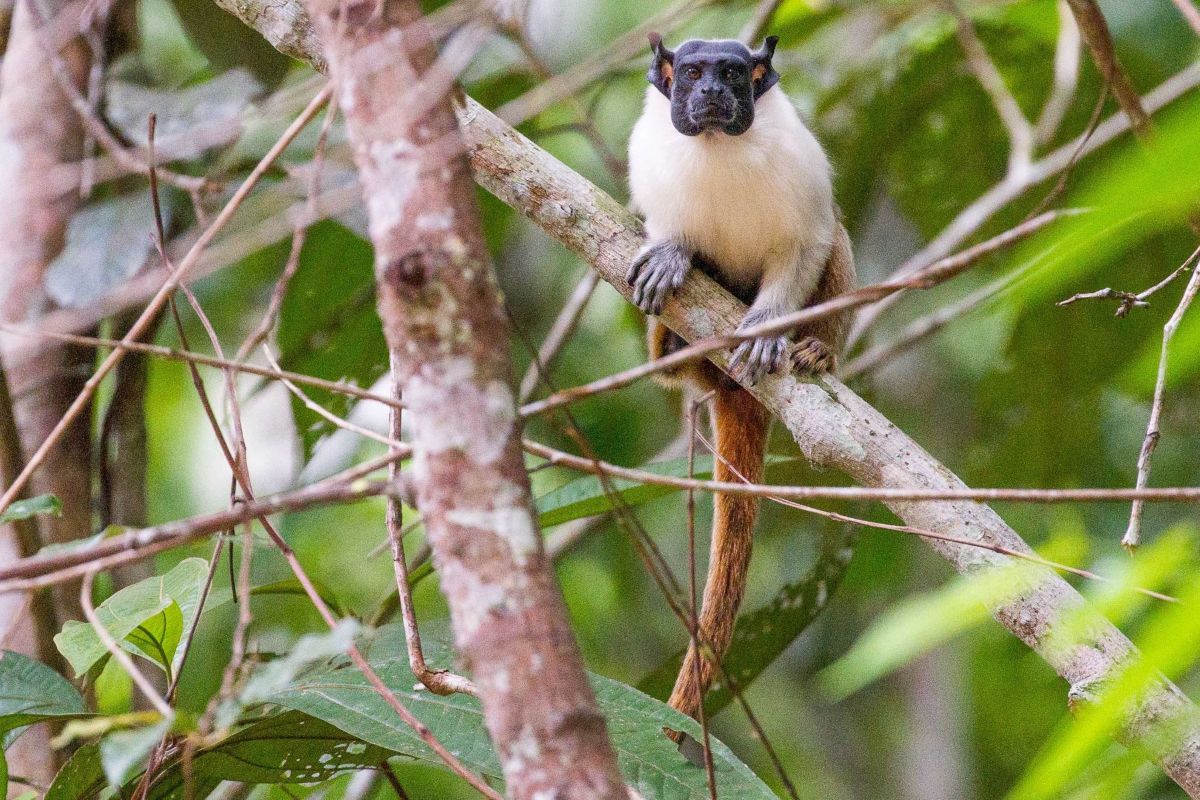
Brazil is the country with the highest primate diversity in the world. By the time of this writing, there are 151 officially recognized species and subspecies within brazilian national territory. This number may change with the discovery of a new species – the most recent one was described in the Amazon in 2023 – or with a potential taxonomic revision that regroups or separates species. Regardless of the exact number, one thing is certain: Brazil is a territory where primates reign. There are species in every state, although Amazonas leads this ranking by far, with 95 of those within its borders – nearly half of Brazil’s entire diversity. Follow this article to see the overall ranking.
Data on the number of monkey species per state were initially obtained by ((o))eco from Salve, a platform for public access managed by ICMBio – the federal agency responsible for the fauna management – , and later verified with the assistance of specialists from the National Center for Research and Conservation of Primates (CPB/ICMBio). The following list considers only species native to each Brazilian state, and primatologists emphasize that further studies are still needed to refine primate distribution data across the country, especially in the Amazon.
Amazonas State’s leadership
Amazonas’ sovereignty is unquestionable. The largest Brazilian state by land area is home to the Amazon rainforest and major rivers that create islands of diversity. With 95 species and subspecies, if it were a country, it would rank third worldwide in number of primates, only surpassed by Brazil itself and Madagascar. The state is home to primates found nowhere else, such as the endangered pied tamarin (Saguinus bicolor), which survives even amid the urban expansion of Manaus, Amazona´s capital.
In well-preserved forest areas, there are also species unique to the state and at risk of disappearing, such as the black squirrel monkey (Saimiri vanzolinii) and the iconic white uakari (Cacajao calvus), both found in the Mamirauá Sustainable Development Reserve and threatened by climate change.
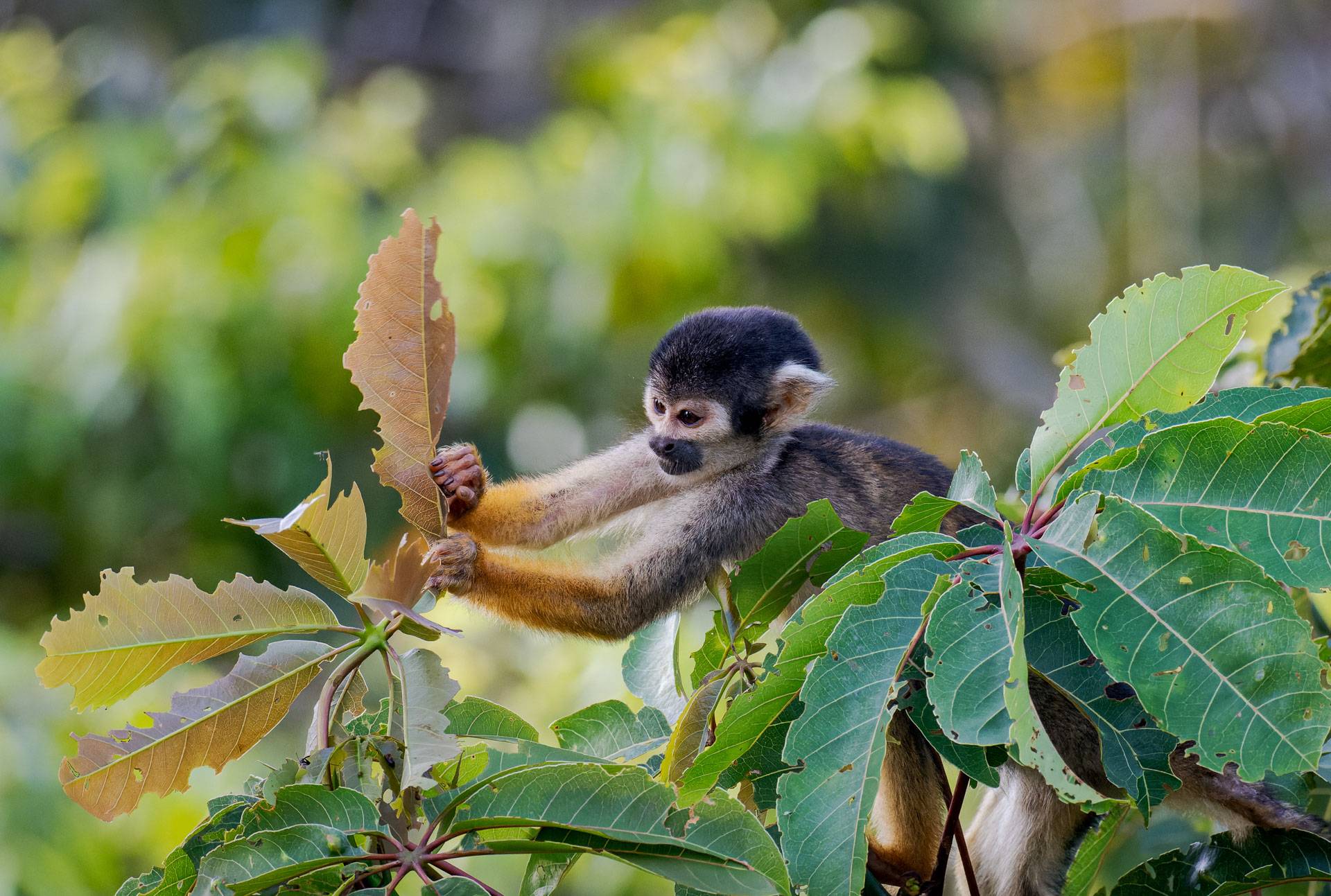
Second place goes to another Amazonian state and territorial giant, Pará. With 40 species and subspecies, its diversity includes capuchins, marmosets, squirrel monkeys, saki monkeys, night monkeys, titi monkeys, howler monkeys, and spider monkeys… illustrated in a field guide launched during COP30.
One notable species in the state of Pará is the Ka’apor capuchin (Cebus kaapori), which still lacks studies and was recently listed amongst the most threatened primates on the planet.
Completing the podium is Mato Grosso, where the Amazon, Cerrado, and Pantanal biomes coexist, along with 32 different monkey species. From the adaptable black-tailed marmoset (Mico melanurus), widely distributed across the three biomes and neighboring states, to Mato Grosso’s titi monkey (Plecturocebus grovesi), which is restricted to northern part of the state.
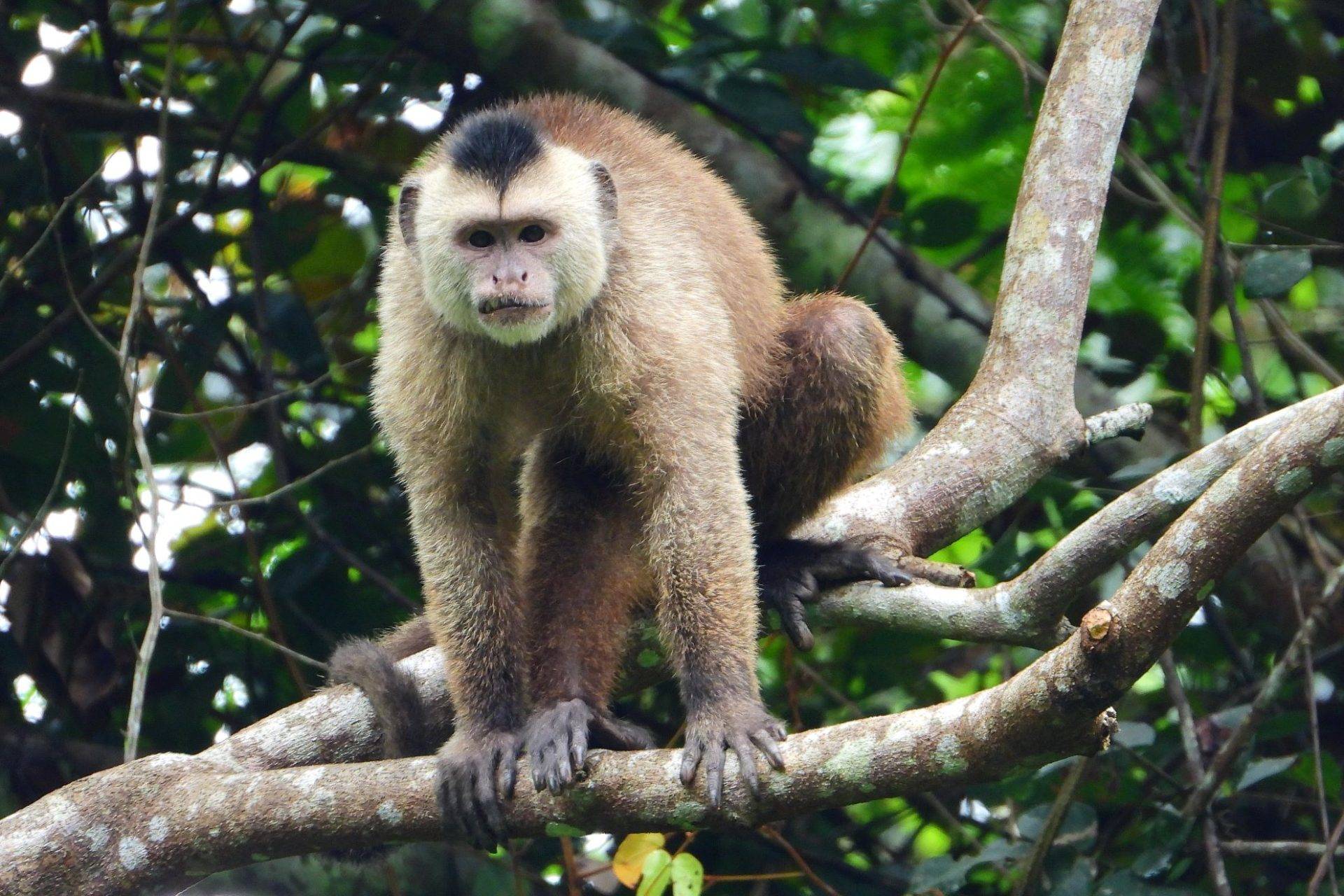
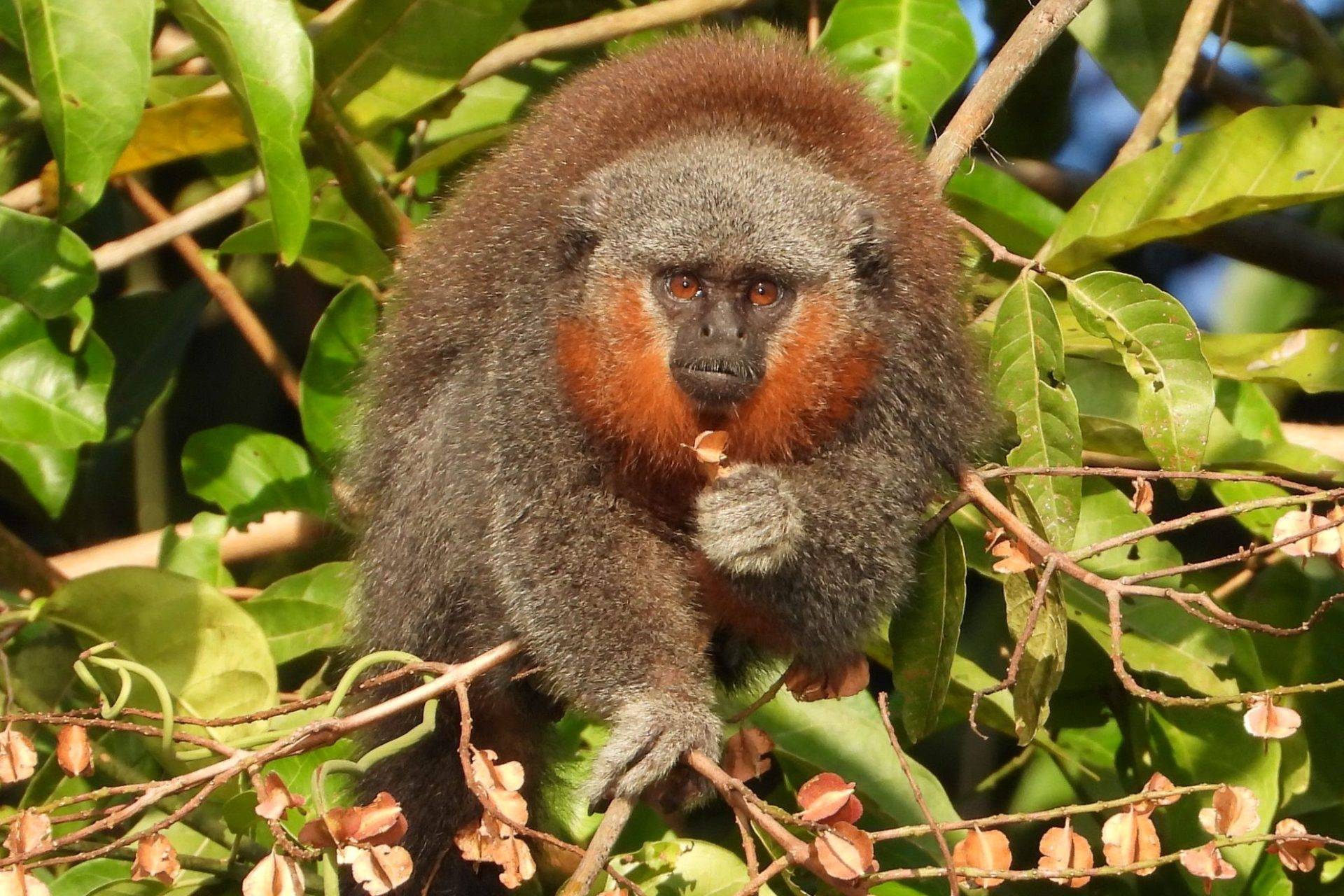
The recently created Mato Grosso Primate Route highlights this biodiversity through an itinerary that spans seven locations across the state’s three biomes, promoting primate-watching tourism, generation of income, science and nature conservation.
Tied in fourth place are two other Amazonian states: Acre and Rondônia, each with 30 species.
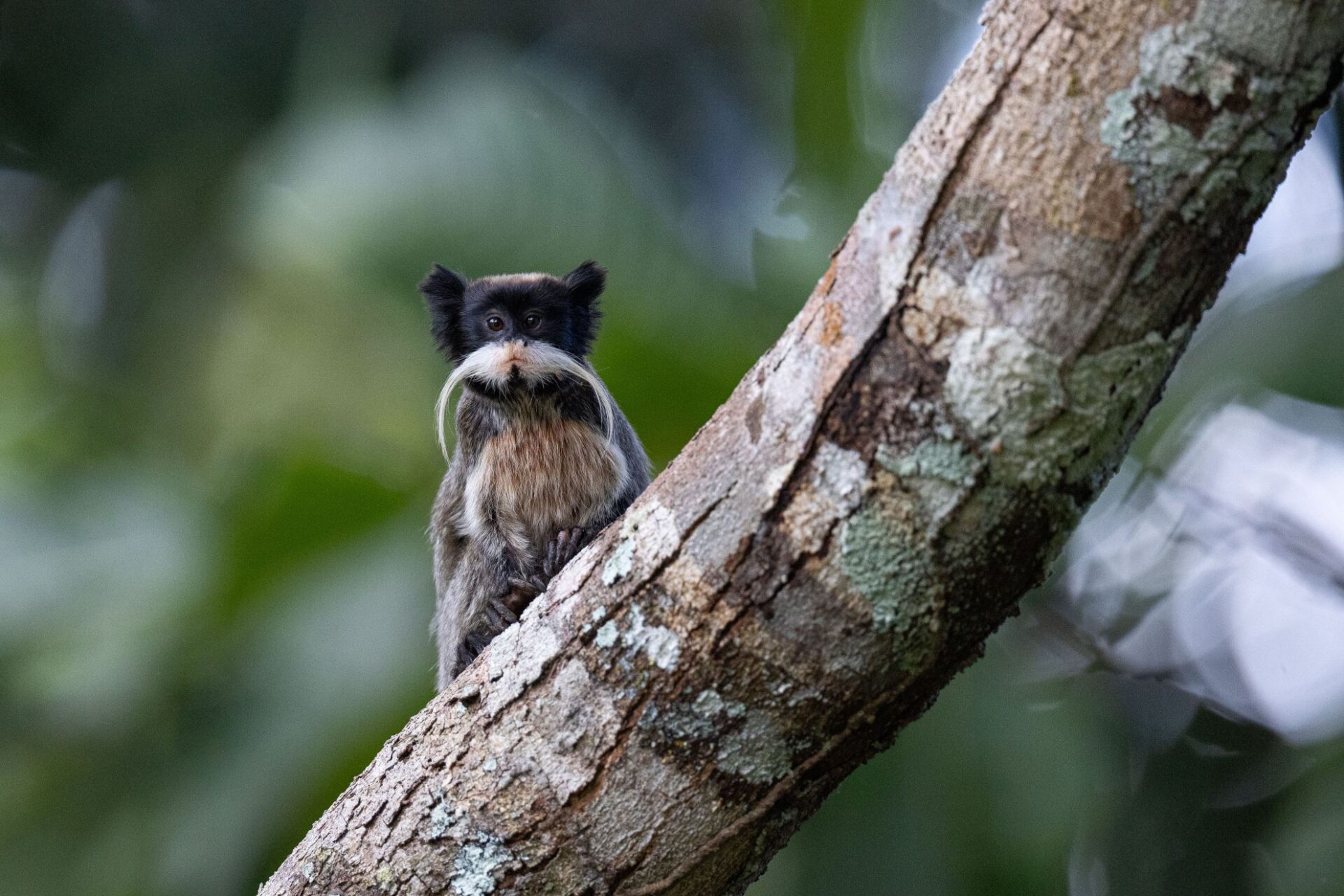
On the Acre side, there are species such as the charismatic emperor tamarin (Tamarinus imperator), famous for its prominent facial hair that gives it an air of nobility; and the elusive bald uakari (Cacajao ucayalii), which is primarily concentrated in the Peruvian Amazon but, within the Brazilian border, can only be found in Serra do Divisor National Park, in Acre.
In Rondônia – which also has a pocket guide for species identification – there are species ranging from small marmosets, such as the endemic Rondon’s marmoset (Mico rondoni), to the large and slender black spider monkey (Ateles chamek).
Outside the Amazon region, Minas Gerais ranks an impressive fifth place, with 17 species. The state is home to both species of muriqui, the largest primate in the Americas: the northern muriqui (Brachyteles hypoxanthus) and the southern muriqui (Brachyteles arachnoides). At the other end of the size spectrum are the small buffy-headed marmoset (Callithrix flaviceps) and the buffy-tufted-ear marmoset (Callithrix aurita). All four are endemic to the Atlantic Forest and, much like the biome itself, are threatened with extinction.
Check out the ranking of primate numbers by state below:
Neotropical Guide
Led by Brazil, the Neotropical region, stretching from southern Mexico to South America, holds the greatest primate diversity on the planet, with a total of 217 species and subspecies, equivalent to about 30% of the world’s biodiversity. Most of them (151) occur in Brazil, 80 of which are endemic to the country, therefore cannot be found anywhere else.
Even so, the region plays a secondary role among the destinations for primate-watching tourism, which tends to focus on gorillas, chimpanzees, baboons, and other species from Africa and Asia. An Illustrated Guide to Neotropical Primates was launched in 2025, in order to promote this activity. The material was produced by Re:wild, with support from the Margot Marsh Biodiversity Foundation.
The publication includes all 217 species and subspecies currently known in the Neotropical region. It includes identification illustrations, geographic distribution data, habitat information, and extinction risk for each one. The book can be purchased online through the publisher’s website.
This story was originally published in Portuguese. The translation to English was done with the assistance of Artificial Intelligence, with final review by a human. For this story, the review was done by the reporters Vinicius Nunes and Duda Menegassi.
-

Duda Menegassi
Jornalista ambiental especializada em unidades de conservação, montanhismo e divulgação científica. →
Se o que você acabou de ler foi útil para você, considere apoiar
Produzir jornalismo independente exige tempo, investigação e dedicação — e queremos que esse trabalho continue aberto e acessível para todo mundo.
Por isso criamos a Campanha de Membros: uma forma de leitores que acreditam no nosso trabalho ajudarem a sustentá-lo.
Seu apoio financia novas reportagens, fortalece nossa independência e permite que continuemos publicando informação de interesse público.
Escolha abaixo o valor do seu apoio e faça parte dessa iniciativa.
Leia também
Thousands of Mining Projects Threaten Water and Biodiversity in Brazil’s Largest Mountain Range
Growing extraction in the Serra do Espinhaço in the state of Minas Gerais also supplies the demand for critical inputs used for renewable energy transition →
Brazilian monkey faces extinction due to climate change
The story of the black squirrel monkey, which lives in one of the most pristine corners of the Amazon, yet may be doomed to extinction as the climate collapses →
Two Brazilian monkeys among the world’s most endangered
The newly published list of the 25 most endangered primates in the world raises alarms about the critically threatened status of the Pied Tamarin and the Caatinga Titi Monkey from Brazil →