


Pará’s Pecuária Sustentável program flirts with failure after deadline pushed back to 2030
A first in the country, the program proposing individual social and environmental monitoring of cattle has produced modest results and raised doubts about its viability.
Story by Naira Hofmeister
September, 17 2026
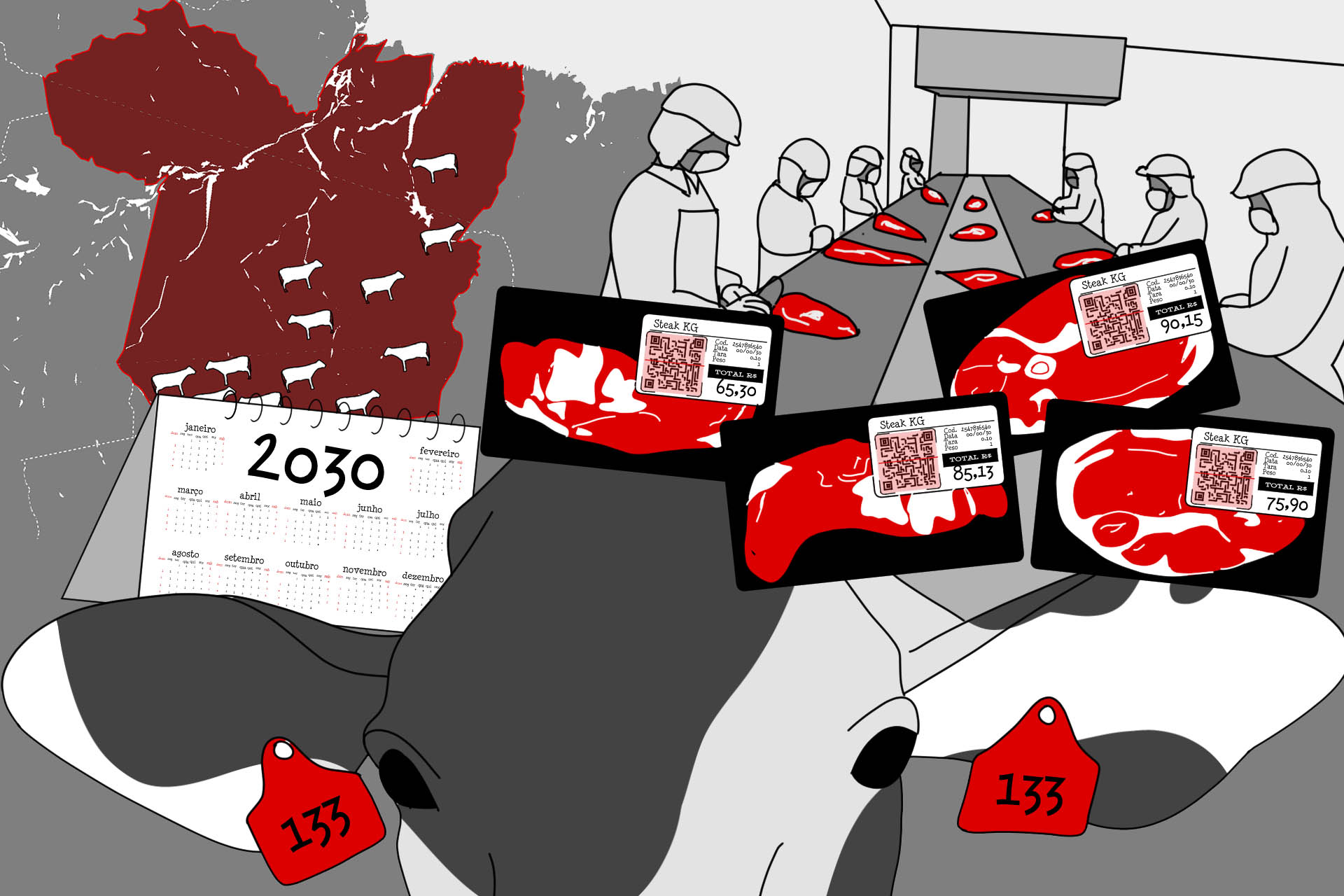
When he learned that cattle ranchers in Pará would be given five more years to individually identify their herds, just before the deadline previously set by the state government was due to expire, Mauro Lucio Costa concluded that the Pecuária Sustentável (“Sustainable Cattle Ranching”) program was over.
“The feeling we see among producers is that the program is dead, they’ve put the final nail in its coffin. There will be no traceability. Nobody is counting on it,” says the disappointed president of the Pará cattle breeders’ association, Acripará, summing up the situation. The association sits on the initiative’s management council but is critical of its implementation.
Pecuária Sustentável is a pioneering public policy in Brazil. It requires individual cattle traceability not only for animal health purposes, but also for social and environmental oversight of their origins, with the aim of dissociating the supply chain from crimes such as illegal deforestation and slave labor – two scourges closely associated with the sector, especially in the Amazon.
Launched in November 2023, the initiative stipulated that by December 2025 all cattle moved in Pará (for slaughter, sale, export or auctions) would have to be individually identified. In December 2026, all animals, even those that had not yet been moved off the property where they were born, would have to receive a “cattle ear tag,” a microchipped device that stores information about the individual animal.
But on December 2, 2025, with just 29 days left before the first deadline, then-Governor Helder Barbalho signed a decree pushing those targets back to 2030 and 2031, respectively. “We at Acripará actually asked for that deadline to be postponed by one year. It was necessary,” Costa admits. “But what they did was put an end to the program, and the disappointment was enormous,” he concludes.
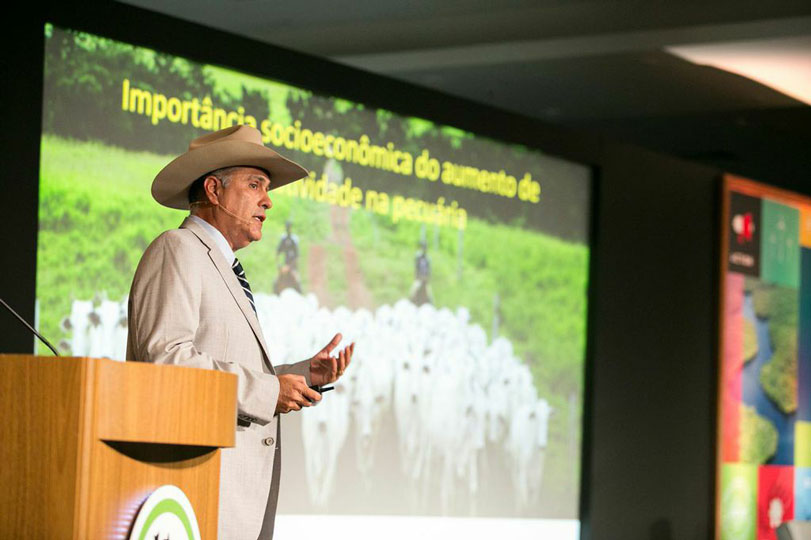
The problem with giving cattle ranchers another five years to comply with the law is mathematical. The new timeframe for individual cattle identification is much longer than the actual life cycle of these commercially raised animals, which is around two and a half years – or even less, as with the new standard known as “China cattle,” which favors early slaughter, at 18 months of age or younger, and which cattle ranchers in the Amazon have been striving to meet.
“Today, nobody is going to put an ear tag on an animal, because by 2030 that animal will already be dead. It serves no purpose at all,” concurs Anderson Brandão, an ESG analyst at the Rio Maria meatpacking company, which had been contributing to the program.
Other members of the initiative’s management council are reluctant to admit that postponing the deadline puts Pecuária Sustentável at risk. “The program is not stagnant, it is moving, and that is what we have to assess at this early stage,” argues the council’s chair, Jamir Macedo, a civil servant currently on leave from Adepará – the state’s animal health protection agency.
“The change only modifies the implementation schedule for one of Pecuária Sustentável’s components, traceability, not the program as a whole,” The Nature Conservancy, an organization that sits on the management council, adds in a statement.
((o))eco sought to map out other results from the program, but little information is available. The rollout of individual cattle identification devices was the only concrete target set out in the decree establishing Pecuária Sustentável.
“This is a blind spot in the public policy itself, which has no monitoring or follow-up strategies,” says Vivian Ferreira, criticizing the policy. She is the co-author of the book Gado, madeira e ouro na Amazônia Legal: desafios e iniciativas de rastreabilidade e transparência (“Cattle, Timber and Gold in the Legal Amazon: Challenges and Initiatives in Traceability and Transparency”), released in August by Abrampa, the Brazilian association of public prosecution service members working on environmental matters.
Data sent by the state’s environment and sustainability secretariat, Semas, reveal that important strategies for bringing producers into the Pecuária Sustentável program are moving slowly. Commercial requalification, for example, which allows cattle ranchers to resume selling cattle to slaughterhouses even if they have cleared forest illegally – provided they isolate the area and begin the environmental regularization process – has attracted only 496 properties out of the 127,000 in the state (half of them with environmental liabilities).
Another component, land tenure regularization, enabled a rural settlement to obtain 300 land titles with the program’s support, according to The Nature Conservancy – ((o))eco sent questions to Pará’s land institute, Iterpa, which went as far as confirming an interview but neither showed up nor sent data on its intended targets.
Finally, another pillar – raising the value of the final product from traced cattle – has yet to gain market support. As ((o))eco was able to establish, only one tannery in Pará has managed to introduce a bonus per hide from identified cattle, paying producers an extra R$25 (around 5 USD). “But now [with the new deadline], not even the bonus is attractive anymore. Producers are saying they won’t join even for an extra R$100, it really has lost credibility,” confirms Anderson Brandão, who is also a technician accredited by the program and provides consulting services to cattle ranchers seeking to individually identify their herds. “Now, nobody will make a move until they are forced to,” he concludes.
“There is an entire external context that needs to be considered in this analysis: the rate of growth in deforestation has slowed; the threat of a boycott of Brazilian beef abroad, which was taking shape in 2022 and 2023, did not materialize; the federal government launched a national traceability program that did not help Pará’s,” notes Paulo Barreto, a senior researcher at Imazon.
“That said, the program, which was not particularly strong to begin with, is now in a very fragile state. The first meeting of the advisory council after the deadline for joining was moved to 2030, for example, took place on the last day of August. It is a sign of abandonment,” he adds. Imazon, which was a member of the council, resigned its seat at the meeting.
Program followed the COP calendar
Pará has Brazil’s second-largest cattle herd, with nearly 26 million animals. For that reason, the goal of tracing the entire herd within a few years was considered ambitious from the day it was established.
It was not just the size of the herd that posed difficulties. The Pecuária Sustentável program had the express objective of bringing “transparency and integrity” to Pará’s cattle supply chain, combining animal health and social and environmental purposes. “The underlying purpose of traceability in Pará is environmental. The main resistance [from cattle ranchers] comes from that,” observes Mauro Lucio Costa, himself a pioneer in attempts to monitor the environmental origins of cattle moving through his ranches.
The initiative was launched during the United Nations Climate Change Conference, COP28, in 2023, in Dubai, in the United Arab Emirates. At the time, the United Nations had already confirmed Belém as the host city for COP30.
The timeframe for cattle ranchers to adopt traceability coincided with the conference calendar – from Dubai to COP30 in Brazil. Initially met with skepticism, the program saw its numbers rise rapidly as the final deadline approached (as did the world’s leading event for climate diplomacy).
“In the second half of 2025, we made a leap. As the December 2025 deadline approached, we saw a lot of demand [for ear tags]. We were moving at a very good pace,” confirms Barbra Lopes, registration and traceability manager at Pará’s animal health protection agency, Adepará, who is responsible for leading the state’s microchipping program.
By July 2025, fewer than 50,000 head of cattle had been individually identified; by October, that number had reached 175,000 – and in November, during the climate conference, the government announced that 300,000 animals had already been individually identified. The result was presented as a successful “case study” during the climate event, combining environmental preservation and social inclusion

“They used it for publicity at COP, for the Norwegian government to see,” alleges Mauro Lucio Costa, president of Acripará.
Less than two weeks after the gates of the blue zone were closed at Parque da Cidade, where COP30’s diplomatic negotiations took place, Barbalho signed the decree moving the deadline to 2030. Since then, only 20,000 head of cattle have been microchipped, according to data Imazon obtained from state authorities. “It became very clear that the program was just a circus put on for COP. Once COP was over, that was it,” Costa reiterates.
Jamir Macedo, chair of the management council, disputes this. “The program was very well designed and very well developed. But it is a complex issue involving several stakeholders,” he explains.
Taking a conciliatory stance, Imaflora’s public policy coordinator, Bruno Vello – who also sits on Pecuária Sustentável’s management council – offers “a twofold interpretation” of the change in dates. “On the one hand, the short deadline for mandatory compliance was important in creating a moment of innovation and creativity for developing the tools that would help make the agenda viable on a statewide scale,” he observes.
“At the same time, extending the deadline has to do with the scale of the challenge of implementing traceability in the Amazon, in Pará,” he notes.
Deforestation: from trump card to Achilles’ heel
The social and environmental component of Pecuária Sustentável, which allowed the state government to “sell” the program at the world’s largest climate event, is also the initiative’s Achilles’ heel among cattle producers. In Pará, 50% of the cattle herd is on illegally deforested properties. Identifying the animals would, beyond dispute, reveal this uncomfortable link.
“This is something that cannot be ignored,” argues Francisco Victer, the representative of Fiepa (Federation of Industries of the State of Pará) on the program’s management council and president of the national union of the meat industry and meat companies, Uniec.
“Once all the animals are identified and you cross-check that against their movements, you end up finding an indirect supplier with a history of deforestation. So that transaction cannot take place in the formal market,” he sums up.
One example is the Rio Maria meatpacking company, which developed a protocol to encourage individual identification among its suppliers. Around 20% to 25% of the animals the company slaughters each month at its three facilities in southeastern Pará are microchipped. The slaughter of these animals is authorized only after their full history, from birth, has been investigated to check that there are no irregularities such as illegal deforestation on any indirect supplier’s property.
According to Anderson Brandão, Rio Maria’s ESG analyst and the project’s coordinator, the meatpacker is not yet facing raw material shortages, but anticipates that they may arise. “For now, if a supplier has irregularities in its history, the meatpacker has a choice: it can buy from the neighbor,” he says, giving an example. “But once everyone has to adopt traceability, there will be a bottleneck,” he predicts.
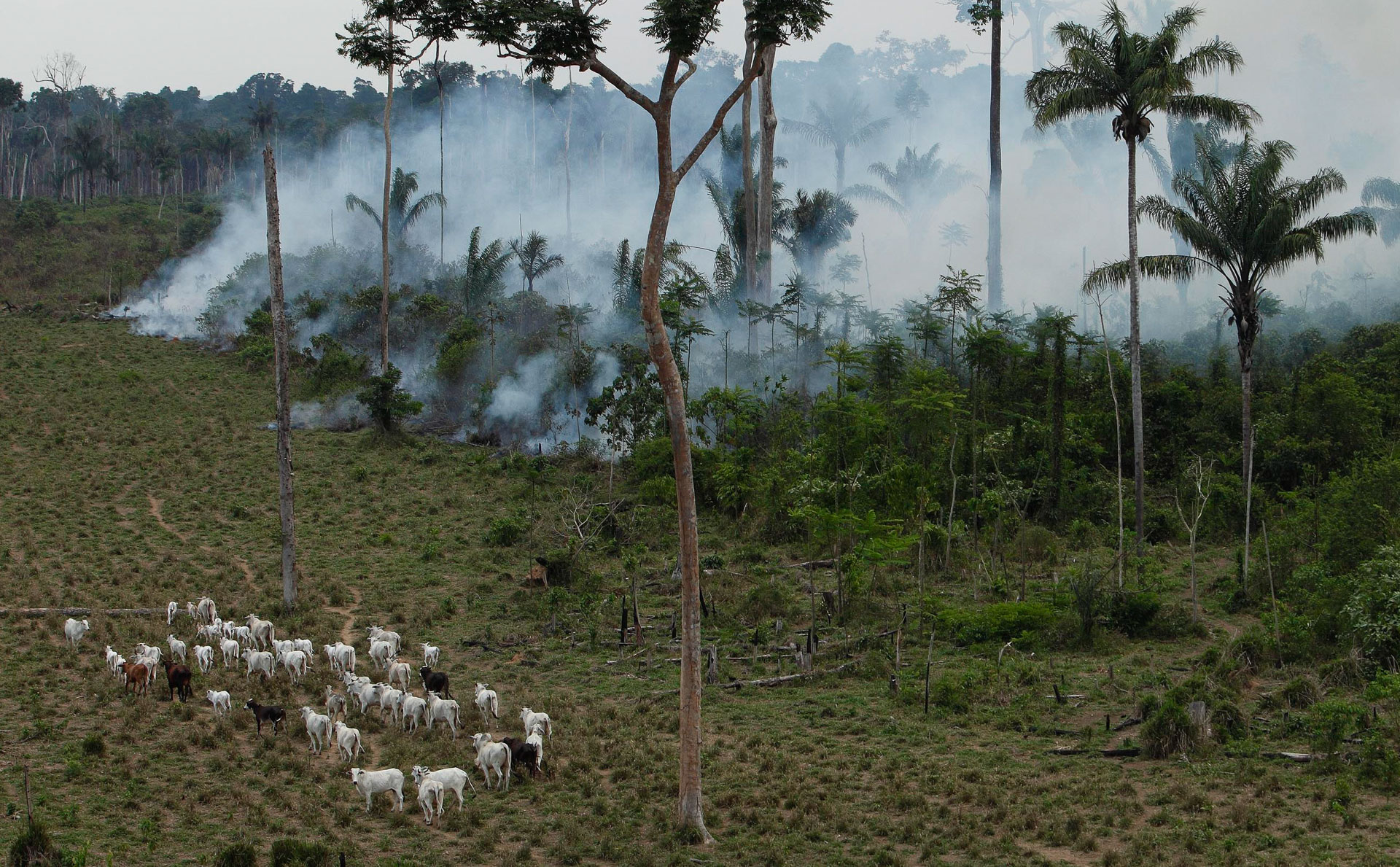
Mauro Lucio Costa, a cattle rancher and president of Acripará, felt the impact of transparency firsthand – and in his bank account. In 2016, he began buying calves only from suppliers that met all the social and environmental requirements of the TAC da Carne – an initiative of Brazil’s federal prosecution service, the MPF, that requires slaughterhouses in the Amazon to verify the origin of the animals they slaughter.
He put the results into a spreadsheet and concluded that tracing the origin of cattle is expensive – not because of the equipment needed to monitor each animal in the herd, but because ranchers have to give up suppliers. “For example, suppose I need to exclude a supplier who has very good cattle, who produces a lot, but has illegal deforestation on the ranch. Then I’ll have to buy from someone else, who is less productive, or perhaps much farther away, which raises my costs,” he says by way of comparison.
Today, even though all 2,500 head of cattle on his ranches are individually identified, he no longer necessarily follows the strictest social and environmental criteria when choosing suppliers. In 2019, there was what he calls a “calf blackout,” with few animals on the market. With fewer purchasing options, applying social and environmental criteria to verify their origins became more complicated.
“I started creating a lot of difficulties for my business. I couldn’t put everything at risk for an experiment that would be worth nothing – because I wasn’t getting a single extra penny for that product. On the contrary, I was increasing my costs,” he sums up.
Environmental regularization offers a way out, but uptake is low
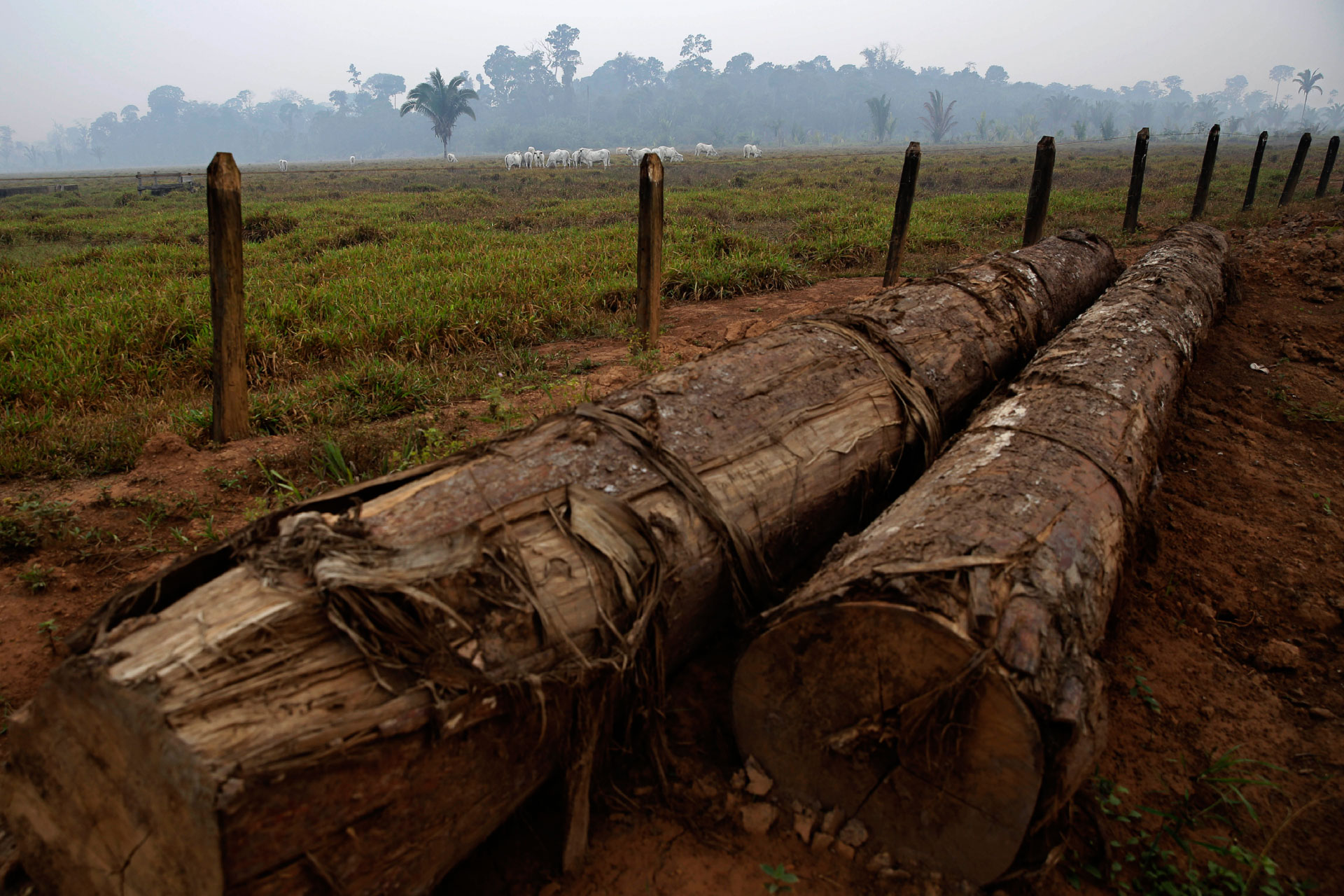
“Greater transparency generates resistance among cattle ranchers,” admits Bruno Vello of Imaflora. “If we want to take this agenda seriously, there need to be ways for these producers to regularize their operations. Because you cannot do without half of the sector’s workforce,” he suggests, recalling that 50% of the herd is on illegally deforested ranches.
The Pecuária Sustentável program incorporated a tool to tackle this problem into its scope: commercial requalification. Born out of Mauro Lucio Costa’s experience and developed jointly with the MPF, the Sirflor platform – an acronym for Sistema de Regularização Florestal (“Forest Regularization System”) – allows cattle ranchers access to the market if they acknowledge illegal deforestation on their property. This benefit is granted provided that the area is isolated from the rest of the property, keeping cattle away from the site, and that producers demonstrate that they have begun the regularization process with the environment secretariat.
“This allows the area to begin regenerating and ensures that the producer will not use it for economic purposes,” points out Bruno Vello of Imaflora. If the producer resumes clearing forest or fails to respond to Semas, they lose their authorization to sell.
Although it is regarded as an innovative tool, only 496 rural properties are registered for commercial requalification. That is a small number out of the 2,000 rural properties participating in the Pecuária Sustentável program, according to data from the public dashboard tracking the initiative. Altogether, Pará has 127,000 cattle ranches, and half of them have environmental liabilities.
Of the 496 that joined commercial requalification, only 135 currently have active authorization to sell animals. Eight permits have been canceled and 45 have expired.
Semas also states that “2,248 hectares with environmental liabilities are undergoing restoration,” while another 23,360 hectares are under review within the program. A tiny fraction, considering that in 2024 alone, nearly 157,000 hectares were deforested in Pará, according to Imazon. The institute found deforestation permits for only 1.2% of that area.
To speed up the process, Semas has moved forward with accrediting other technologies that can carry out commercial requalification. Today, in addition to the Sirflor platform, developed by Niceplanet Geotecnologia, Agrotools’ Reconecta and Produzindo Certo S.A.’s Pró Produtor platform are authorized. The call for accreditation remains open to new companies that meet the requirements established by the secretariat.
“Today we have the legal instruments, the institutional capacity and the available technologies. That is more than enough to trace the herd,” observes Alexandre Mansur, one of the coordinators of Radar Verde, which developed indicators of transparency and control in the beef supply chain. “The difficulty here in Brazil is the complexity of cattle ranching when it comes to environmental and land tenure compliance,” he adds.
Program’s management includes NGOs, cattle ranchers and meatpackers
The Pecuária Sustentável program’s strategy for turning things around and keeping the initiative from dying is to broaden dialogue – and even confrontation – within the supply chain.
The program, for example, is managed by a council bringing together the state government, organizations representing cattle ranchers and family farming, meatpackers and NGOs. “One of the main advances brought about by the program was the creation of a permanent space for dialogue, collaboration and trust among the different segments of the supply chain,” The Nature Conservancy notes in a statement.
The program also has an advisory council with tripartite coordination – shared among the nonprofit, production and services sectors represented on the council. “The importance of having this three-way coordination structure is that you have dissenting voices and a space for confrontation, which is necessary,” observes Graciela Froehlich, a researcher at IPAM (Amazon Environmental Research Institute), one of the co-coordinators.
The spirit of collaboration seems to have spread to the private sector, as in the case of the Rio Maria meatpacking company, which developed its own individual cattle identification protocol together with Durli Couros. Since the leather is exported to Europe, the companies pay producers an extra R$25 (around 5 USD) per microchipped head. “But for the beef, we still do not have a premium price,” laments Anderson Brandão, Rio Maria’s ESG analyst.
According to him, around 200,000 head of cattle have already received individual devices through the initiative – that is almost half of all the cattle already identified, according to Pecuária Sustentável’s monitoring dashboard, which recorded 423,000 animals in the program in early September. After the deadline for mandatory participation in Pecuária Sustentável was postponed to 2030, no Rio Maria supplier has tagged any new animals.
Adepará reports that, although low, there is still demand for ear tags at the agency – a sign that some producers are interested in getting ahead of the new traceability target for 2030. “We know that a large share of identification will only happen when it becomes mandatory. That is something particular about us, about Brazilians, about rural producers,” says Jamir Macedo, chair of the program’s management council.
He admits that, given the change in the deadline, they are seeking other indicators to measure the public policy’s progress. “We are studying the necessary adjustments, new targets and indicators, but the council continues to meet regularly every month,” he affirms.
According to the decree that established the management council, published on January 15, 2024, council members’ terms lasted two years – and therefore ended in early 2026. “This did not affect the council’s functioning. We continue with the same council members,” he affirms. He adds that the council’s composition itself and the renewal of terms are on its agenda.
-

Naira Hofmeister
Naira Hofmeister atua como jornalista freelancer desde 2006, sempre baseada em Porto Alegre. Ao longo de sua trajetória profi... →


Leia também

Congresso eleito terá perfil mais contrário à agenda ambiental, aponta Observatório do Clima
Sete em cada 10 parlamentares que estarão no Legislativo Federal em 2027 estão nas faixas de baixa convergência ambiental; No Senado, o quadro é pior →

Conama cria cadastro nacional para rastrear máquinas usadas em garimpos
Aprovada por unanimidade, nova resolução permite monitorar a circulação e a localização de escavadeiras hidráulicas, retroescavadeiras e balsas com dragas de mineração →

Para o financiamento climático chegar à margem
Aproximar poder público, iniciativa privada, instituições financeiras, organizações e lideranças locais será fundamental para transformar recursos em projetos →