


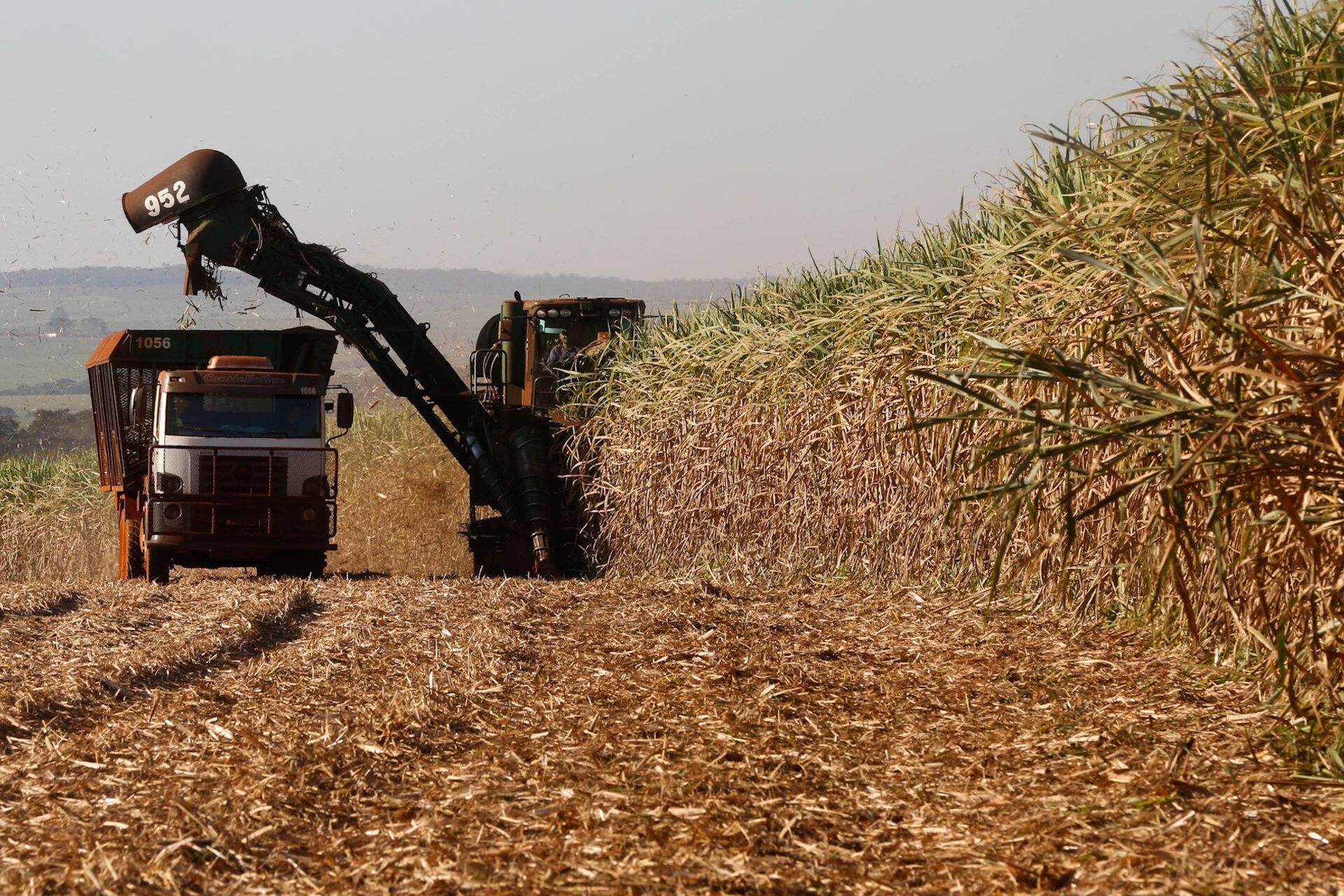
In Brazil’s public debate, environmental policies are still often portrayed as synonymous with economic cost. The narrative is familiar: protecting the environment raises production costs, undermines competitiveness, destroys jobs, and slows growth. Repeated often enough, this logic turns environmental regulation into a perceived threat to development. But what if that assumption is wrong? What if environmental regulation can stimulate innovation and industrial modernization? Could it push a sector to make a leap in quality and productivity? Might it help a regional economic activity become stronger and more competitive? São Paulo’s experience with sugarcane suggests exactly that.
A study by the Research Network on Productivity & Sustainability (Rede PP&S) shows that the gradual ban on sugarcane burning reduced agricultural employment, but also triggered a broader economic transformation: it accounted for more than 70% of industrial employment growth in the regions analyzed, increased per capita income, and helped reduce poverty, unemployment, and child labor. A clear win-win outcome for both businesses and society. Given its significance, this case deserves closer attention.
This transformation began in 2002, when the state of São Paulo passed legislation to gradually phase out the burning of sugarcane straw before harvest. For decades, this practice had been treated as a natural part of the production process. Burning made manual harvesting easier by removing the straw and driving away venomous animals, but it also generated massive volumes of smoke, air pollution, greenhouse gas emissions, and serious public health impacts, especially respiratory problems in urban and rural communities near sugarcane fields.
With the new regulation banning burning, mechanization advanced rapidly. According to the study “From Fields to Factories: How São Paulo’s Burning Ban Drove Industrialization,” just over 30% of harvested area was already mechanized by 2006. In 2012, that figure had surpassed 60%. This shift reduced the need for manual labor. A single harvester can replace dozens of sugarcane cutters. In theory, it seemed like the perfect recipe for a rural labor market crisis.
There was, indeed, a sharp decline in demand for manual labor. But that was not the whole story. The analysis of 393 municipalities in São Paulo between 2000 and 2010 shows that mechanization accounted for 77% of the contraction in agricultural employment during the period. At the same time, the expansion of agro-industry, especially the sugar and ethanol sectors, explained 74% of industrial employment growth. In other words, workers left the fields but were absorbed by factories.
The social effects were also positive. In the municipalities most affected by mechanization, per capita household income rose by nearly 6%. At the same time, unemployment fell by around 24% and poverty declined by approximately 13%. Child labor among children aged 10 to 15 also decreased by nearly 10%.
These findings challenge the still-dominant view in Brazil that environmental regulation necessarily entails economic costs.
Of course, this does not mean that any environmental policy will automatically generate broad social gains. São Paulo’s experience was shaped by specific conditions. The sugarcane supply chain already had strong agro-industrial integration, which made it easier to absorb displaced workers. Not every sector or region has the same capacity to support such a transition. But the central lesson remains.
The question should not be whether environmental policies help or harm the economy. The right point is: under what conditions can they stimulate better growth? Because well-designed regulations can do more than impose restrictions. They can reshape incentives, accelerate innovation, eliminate outdated technologies, and push production chains toward more efficient models.
There is still a persistent temptation to treat sustainability as a cost or a bureaucratic obstacle. But modern economies grow precisely by incorporating productivity, technology, and greater value creation. Under this logic, sustainability may be less a brake and more an engine of modernization. São Paulo sends a clear message: environmental policy does not have to be only environmental policy. When well designed, it can also be economic, industrial, and social policy. Perhaps the real mistake is continuing to treat growth and environmental protection as if they were natural enemies.
This story was originally published in Portuguese. The translation was done with the assistance of Artificial Intelligence, with final review by the journalist Fabiani Matos
-

Alexandre Mansur
Diretor de projetos do Mundo Que Queremos →
-

Desirêe F. Galvão
Mato-grossense, pós-graduada em Práticas Contemporâneas do Jornalismo, mestre em Economia e Gestão do Ambiente e analista técnica do Radar Verde. →
Se o que você acabou de ler foi útil para você, considere apoiar
Produzir jornalismo independente exige tempo, investigação e dedicação — e queremos que esse trabalho continue aberto e acessível para todo mundo.
Por isso criamos a Campanha de Membros: uma forma de leitores que acreditam no nosso trabalho ajudarem a sustentá-lo.
Seu apoio financia novas reportagens, fortalece nossa independência e permite que continuemos publicando informação de interesse público.
Escolha abaixo o valor do seu apoio e faça parte dessa iniciativa.
Leia também
Reforesting may be the most urgent policy to save the Amazon
Transforming already deforested areas into forest-based productive systems emerges as a decisive strategy in the face of traditional measures that are failing →
Extreme heat is becoming one of the greatest threats to childhood in brazil
A groundbreaking study shows that, in the coming decades, heat-related deaths of young children in Brazil could surge by up to 87% →

There’s a Good Reason to Pay Attention to Trancoso’s Organic Festival
Some of Brazil’s most celebrated chefs are leading a movement that goes far beyond cuisine →